
A useful fight-prep framework should make the athlete’s decisions clearer under pressure. The purpose of analysis is not to sound complex; it is to change what gets trained.
Drill the decision, not only the technique
If the game plan depends on punishing a specific entry, the athlete needs repeated exposure to that entry. The drill should include the cue, the recognition, the response and the position that follows. Technique quality matters, but the decision context is what makes it transferable.
Choose partners for the problem they can reproduce
A sparring partner does not need to look exactly like the opponent. They need to reliably reproduce the stance, range, pace, pressure, grip, takedown route or positional problem your athlete must solve. One partner may reproduce the opponent’s pressure while another is better for the technical threat.
Use constraints to force the priority
Open sparring can hide whether the athlete is solving the right problem. Add constraints: start every exchange at a specific range, require the partner to pressure, begin from a clinch or wall position, limit one athlete to a certain attack, or score a specific defensive response. Constraints increase repetition without turning the session into dead drilling.
Progress resistance without losing the objective
Start with enough cooperation for the athlete to understand the decision, then add timing uncertainty, resistance and fatigue. If the athlete repeatedly abandons the tactical objective under pressure, reduce complexity and rebuild the decision rather than adding more instructions.
Measure whether the behavior is appearing
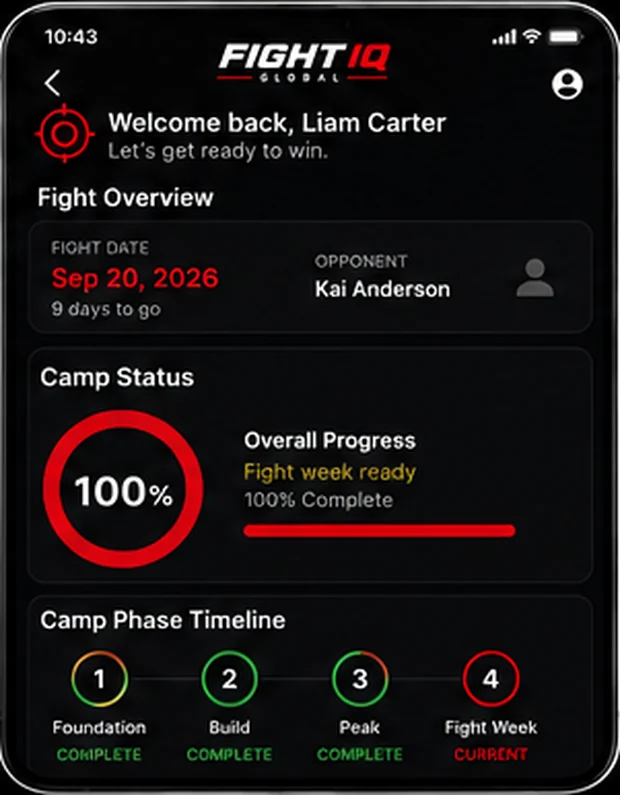
A simple camp checkpoint can be more useful than a complicated metric. Is the athlete recognizing the cue sooner? Are they reaching the preferred position more often? Are they exiting safely after the exchange? Is the corner using the same language? Track the behavior the plan is supposed to create.
Finish with realistic rounds
The final stages of camp should show whether the athlete can carry the key priorities into live work without constant reminders. The goal is not to win every sparring round. The goal is to make the intended decisions more automatic under realistic pressure.
Review with the coach
Fight IQ can help organize preparation, but generated analysis is not a substitute for qualified coaching judgment. The coach should decide what fits the athlete, what is safe, what is legal under the ruleset and what can realistically be trained before competition.