
A useful fight-prep framework should make the athlete’s decisions clearer under pressure. The purpose of analysis is not to sound complex; it is to change what gets trained.
Start with the matchup, not your favorite techniques
A fight plan should begin with the problem the opponent creates. Identify the range, position or phase where your athlete has the best chance to work effectively, then identify the opponent’s strongest route into their own game. The goal is to make the matchup easier to understand, not to list every technique the athlete knows.
Reduce the plan to a few priorities
A useful plan usually has a small number of primary ideas: what you want to create, what you want to deny, what the first defensive response should be and what the corner should watch as the fight develops. Under fatigue and pressure, clarity matters more than volume.
Build a first response for the opponent’s best weapon
Do not prepare only for your preferred offense. Decide what the athlete does when the opponent reaches the exact situation they want. Rehearse that response until it becomes familiar, then build the counter or escape that follows it.
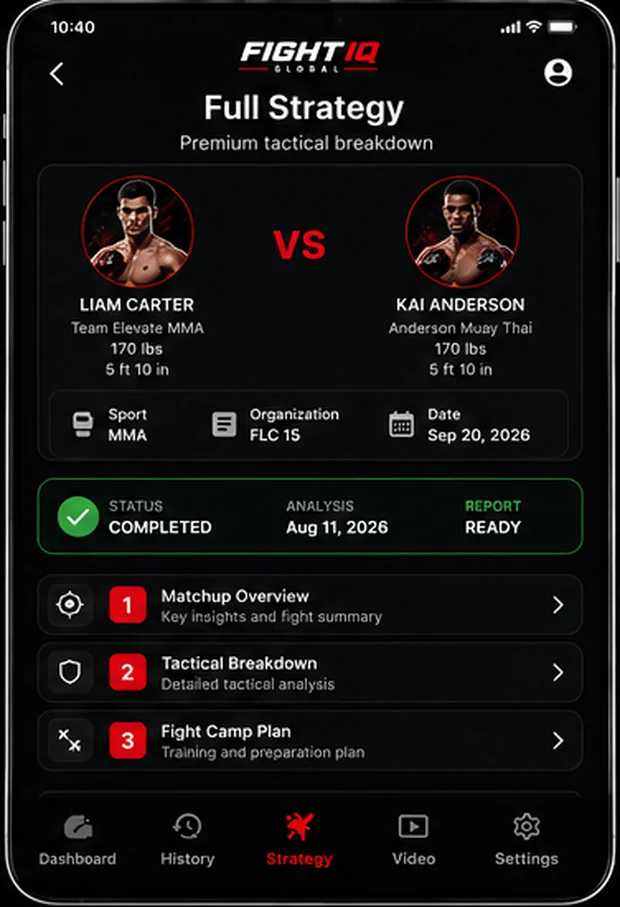
Connect every important idea to training
Each tactical priority should produce a training decision. If you want to punish a specific entry, create drills that reproduce the entry. If range control matters, choose sparring constraints that force the athlete to solve range repeatedly. If the plan depends on pacing, the conditioning and round structure should reflect it.
Keep corner language short
The athlete should be able to explain the plan back to the coach in simple language. Build a few cue words or phrases that mean the same thing in the gym and on fight night. The more consistent the language is during camp, the less explanation is needed under pressure.
Review and update the plan as camp develops
A game plan is a working hypothesis. Sparring, new footage, injury status, conditioning and athlete feedback can all change what is realistic. Keep the main objectives stable when possible, but update the route when the evidence changes.
Review with the coach
Fight IQ can help organize preparation, but generated analysis is not a substitute for qualified coaching judgment. The coach should decide what fits the athlete, what is safe, what is legal under the ruleset and what can realistically be trained before competition.