
Start with what can actually change the fight
Before choosing techniques, identify the athlete’s strongest routes, the opponent’s most reliable threats and the positions where one small decision can change the entire exchange. A useful game plan should be short enough to remember and specific enough to train.
Choose the pressure line
Pressure is more useful when it takes away the opponent’s preferred exit. Decide how the athlete will cut space without walking directly into knees, elbows or counters.
Build elbow awareness early
Close-range entries should include head position, guard responsibility and exit choices. Elbow risk changes the cost of careless boxing-range exchanges.
Define clinch priorities
Know whether the matchup favors knees, turns, posture control, frames or quick exits. Rehearse the first two or three decisions rather than treating the clinch as an improvised phase.
Use kicks to shape reactions
Repeated body and leg attacks can change stance and guard reactions. Use those responses to create follow-up opportunities rather than throwing isolated techniques.
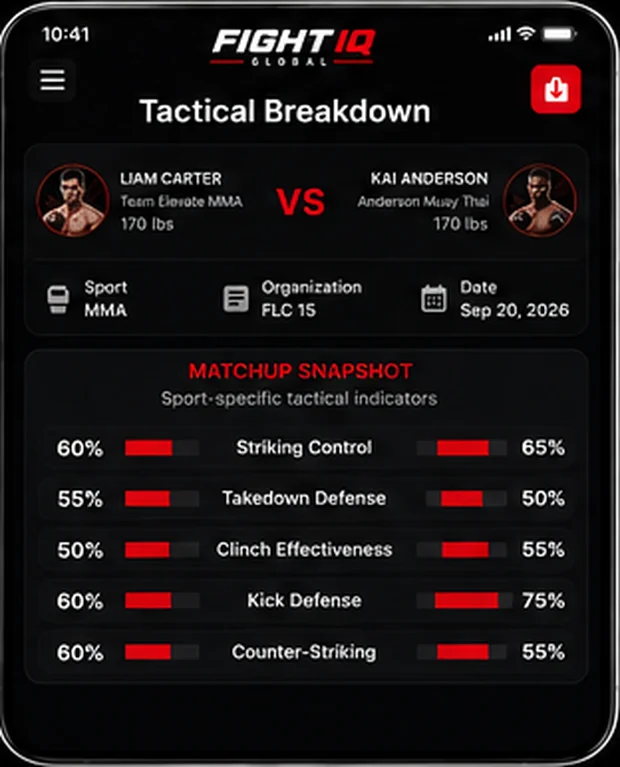
Turn the strategy into training
The plan should create visible changes in drilling, sparring, partner selection, pacing and corner language. If an observation does not change any preparation decision, it may not deserve much attention during camp.
Use the ruleset as part of the game plan
Organizations can differ in scoring, legal techniques, round structure and boundary rules. Confirm the current event rules and use them when deciding which exchanges are high value, which risks are acceptable and what the corner should watch for.