
Start with what can actually change the fight
Before choosing techniques, identify the athlete’s strongest routes, the opponent’s most reliable threats and the positions where one small decision can change the entire exchange. A useful game plan should be short enough to remember and specific enough to train.
Win the range transitions
Do not plan striking, wrestling and grappling as separate sports. Identify the transitions your fighter can create safely and the transitions the opponent is most likely to force.
Define the cage problem
If the ruleset uses a cage, decide what changes when the fighter is backed to it, pressuring into it or exiting from it. Wall position can change takedown mechanics, clinch choices and striking risk.
Build a first defensive response
The athlete needs a rehearsed answer when the opponent reaches their strongest phase. That might be an underhook, angle exit, frame, sprawl, guard retention sequence or stand-up route depending on the matchup.
Plan energy and pace
MMA can create costly bursts through scrambles, wrestling exchanges and prolonged clinch work. The strategy should account for where the athlete can spend energy and where they need efficiency.
Turn the strategy into training
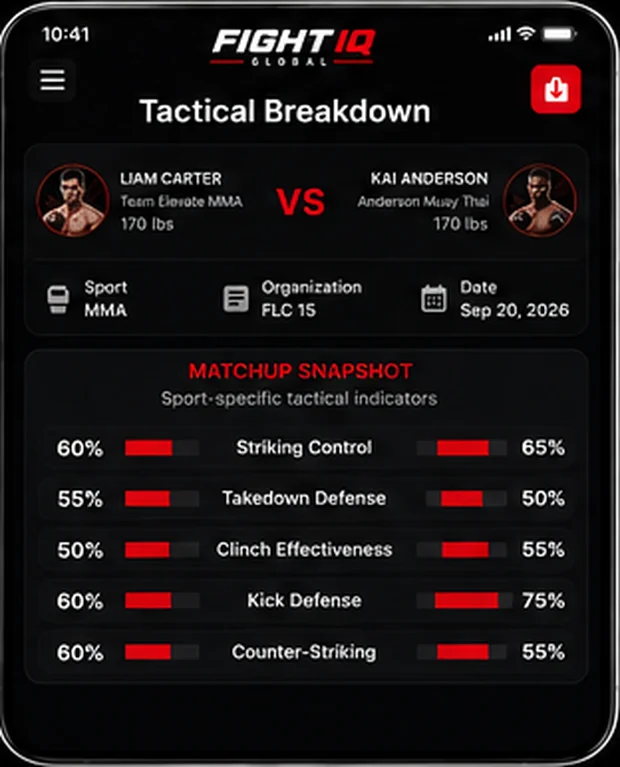
The plan should create visible changes in drilling, sparring, partner selection, pacing and corner language. If an observation does not change any preparation decision, it may not deserve much attention during camp.
Use the ruleset as part of the game plan
Organizations can differ in scoring, legal techniques, round structure and boundary rules. Confirm the current event rules and use them when deciding which exchanges are high value, which risks are acceptable and what the corner should watch for.