
Start with what can actually change the fight
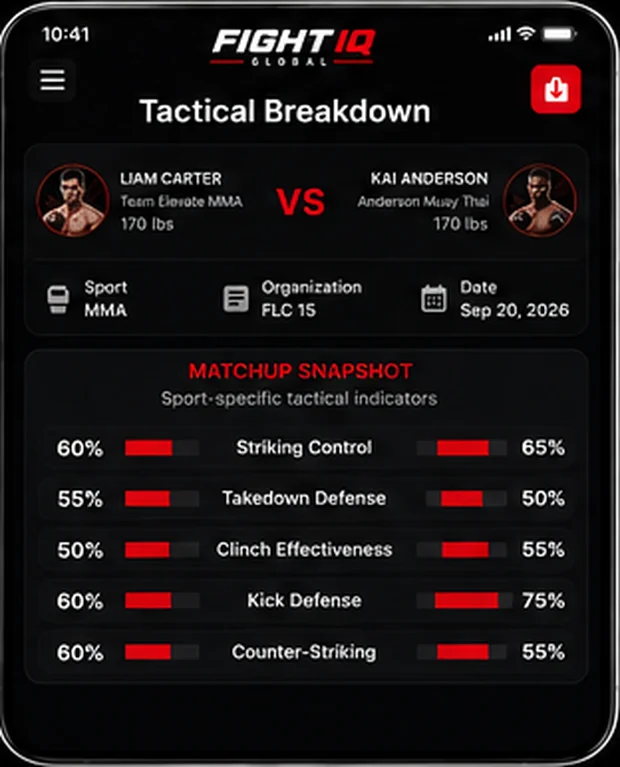
Before choosing techniques, identify the athlete’s strongest routes, the opponent’s most reliable threats and the positions where one small decision can change the entire exchange. A useful game plan should be short enough to remember and specific enough to train.
Own a preferred range
Identify whether the athlete should spend more time at kicking range, boxing range, knee range or clinch range, and what cue moves the fight from one to the next.
Plan the return after defense
Checking a kick, catching a kick, framing a knee or blocking a punch should lead into a reliable return. The best defensive action is often the one that creates immediate scoring opportunity.
Treat the clinch as its own phase
Know whether the goal is control, knees, off-balancing, elbows, separation or simply preventing the opponent from building their preferred clinch.
Protect balance and posture
A technically clean weapon loses value if the athlete is consistently off balance or vulnerable on recovery. Build combinations that finish in positions the athlete can defend from.
Turn the strategy into training
The plan should create visible changes in drilling, sparring, partner selection, pacing and corner language. If an observation does not change any preparation decision, it may not deserve much attention during camp.
Use the ruleset as part of the game plan
Organizations can differ in scoring, legal techniques, round structure and boundary rules. Confirm the current event rules and use them when deciding which exchanges are high value, which risks are acceptable and what the corner should watch for.